Ativa MEdical
Quick, Easy, and Accurate
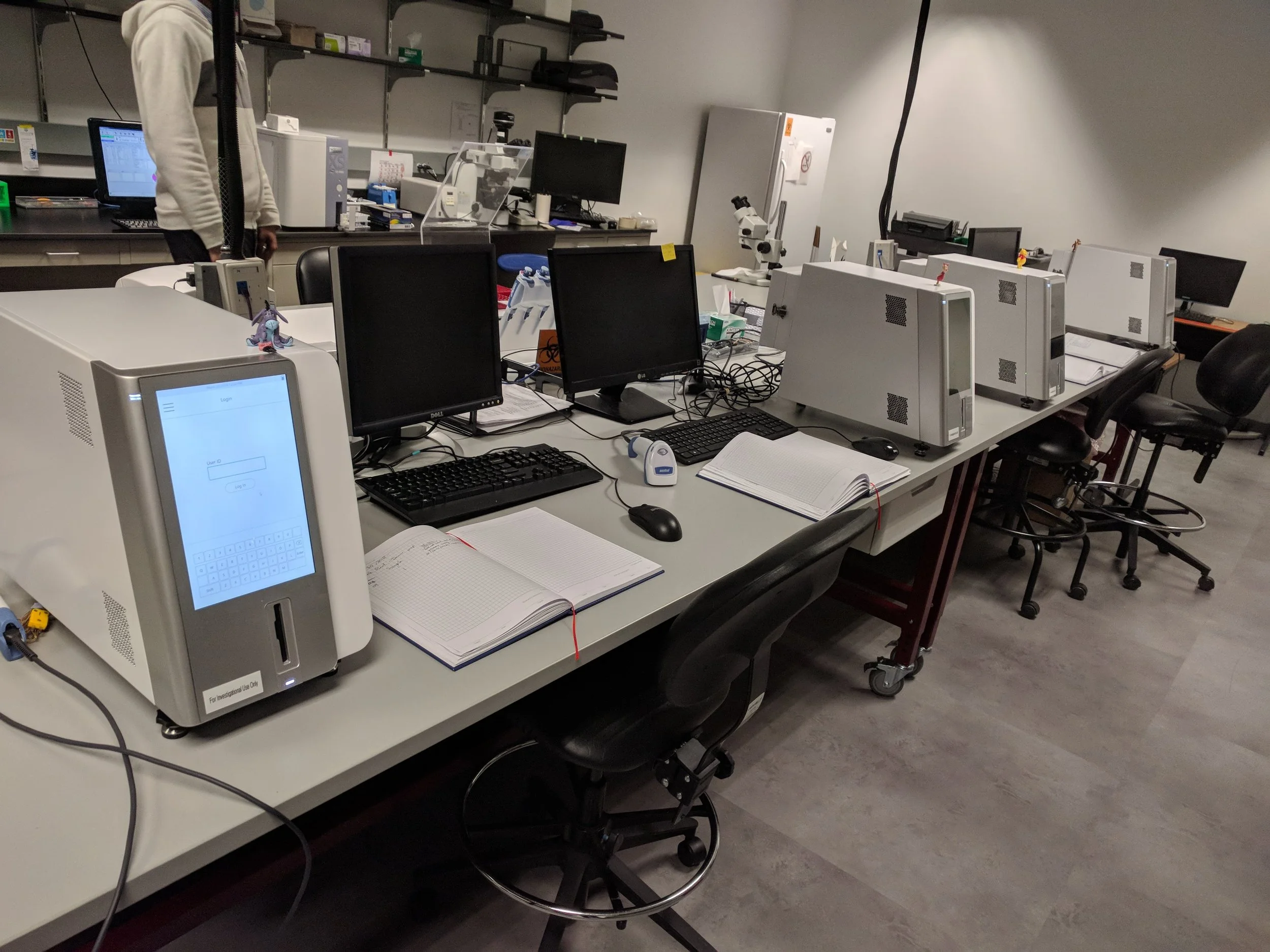
As a Research and Development Engineer at Ativa Medical, I supported the development of an innovative point-of-care diagnostic platform designed to perform Complete Blood Count (CBC) analysis from a small blood sample within a compact, automated system. The platform combined advanced microfluidic sample handling, precision optical measurement systems, and highly reliable mechanical subsystems to deliver laboratory-quality diagnostic results in a format intended for decentralized healthcare environments.
My role focused on overall system refinement and performance improvement across the instrument and consumable platform. Working within a multidisciplinary engineering team, I contributed to the evaluation, testing, and optimization of integrated system performance, helping identify and resolve issues that affected reliability, repeatability, and measurement accuracy. This work required a detailed understanding of the interactions between microfluidic components, optical detection systems, mechanical assemblies, and software-driven processes that together produced clinically relevant data.
A significant focus of development centered on improving system robustness and reducing sources of variability that could impact test results. Through iterative testing and design improvements, the team worked to enhance fluid handling consistency, optical measurement stability, mechanical durability, and overall system reliability. The ultimate objective was to produce a fleet of fully functional systems capable of supporting FDA 510(k) submission activities, requiring a level of performance, repeatability, and quality consistent with the demanding standards of the medical device industry.
This project provided valuable experience working within a highly regulated product development environment where engineering decisions directly influenced diagnostic accuracy, user confidence, manufacturability, and product readiness.
Flow cytometry
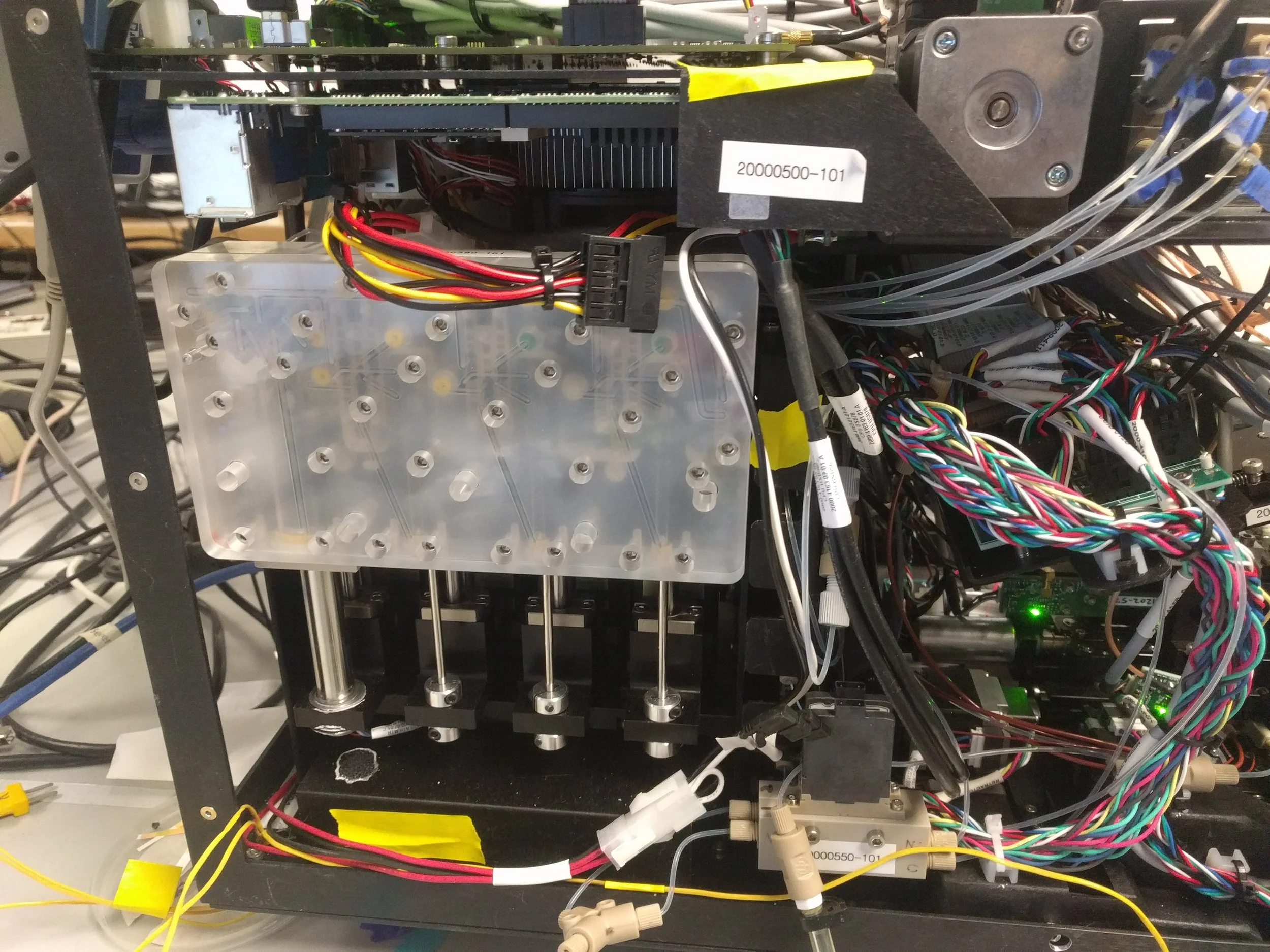
Precise fluid handling was one of the most critical performance requirements of the CBC analyzer, as measurement accuracy depended on the system's ability to consistently meter, transfer, and dispense small volumes of fluid throughout the test process. The fluidic architecture utilized four independently controlled precision pumps, each consisting of a piston displacement mechanism driven by a stepper motor through a belt-driven actuator system. Integrated electronic valves within each pump assembly provided automated control of fluid routing and port selection.
To ensure accurate and repeatable fluid delivery, each fluid path incorporated flow sensors that continuously monitored flow rate and volumetric displacement. This feedback was used to verify dispense volumes, evaluate flow stability, and identify performance deviations during operation. The resulting data provided valuable insight into system behavior and supported ongoing optimization efforts.
A significant portion of development focused on improving pump efficiency and consistency. Piston seal designs were refined to reduce friction and drag while maintaining reliable sealing performance across the full operating range. These improvements reduced mechanical load on the drive system and contributed to more stable flow characteristics. In parallel, pump control algorithms were optimized through PID gain tuning, allowing flow profiles to be tailored for the specific requirements of each test protocol. The combination of mechanical refinement, sensor feedback, and closed-loop control resulted in improved fluid handling accuracy, repeatability, and overall system reliability.
Optical measurement system
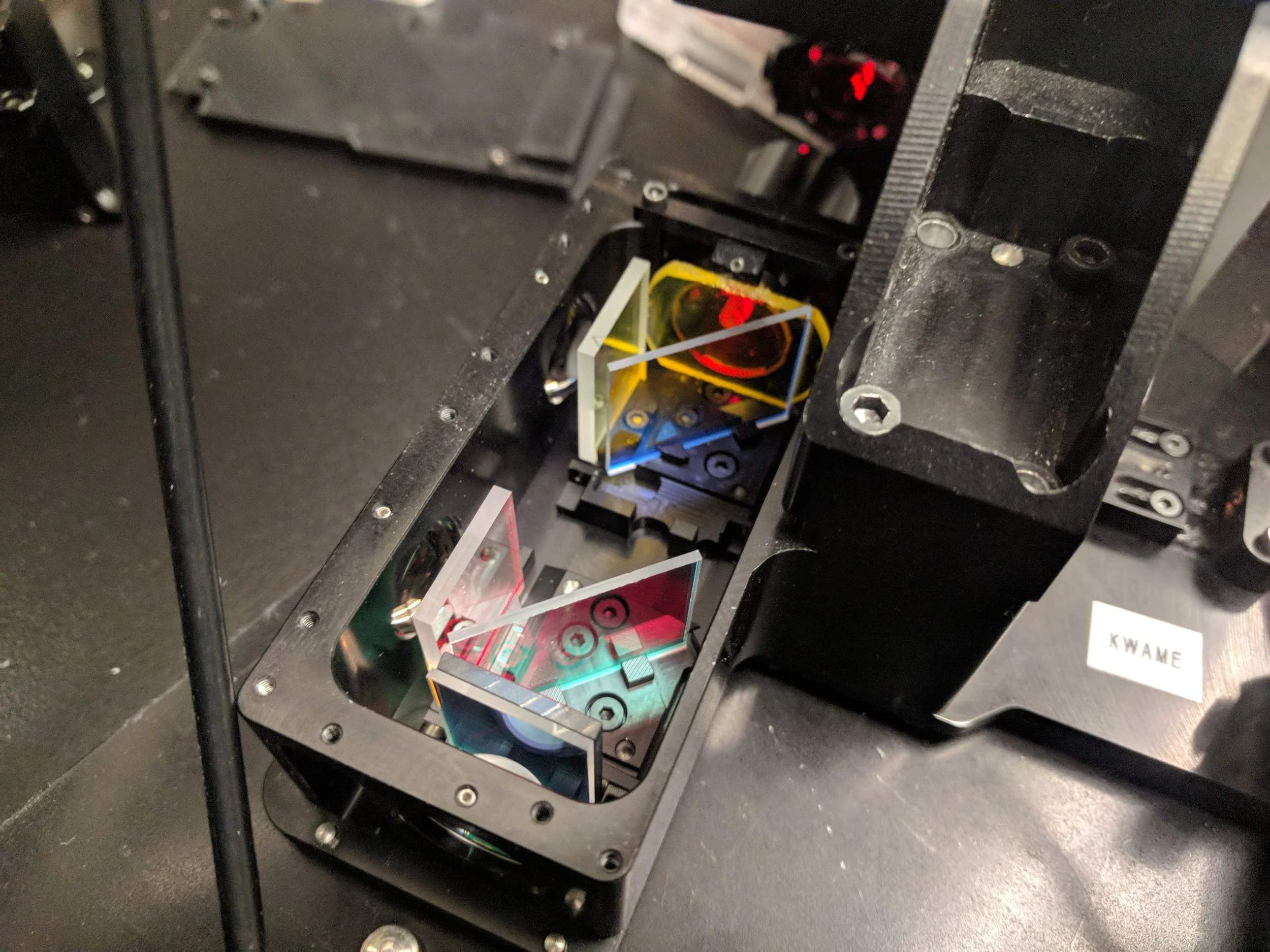
The optical subsystem served as the foundation of the analyzer's flow cytometry capabilities, utilizing multiple laser wavelengths to interrogate individual blood cells as they passed through the measurement region. The quality of the resulting data depended heavily on the precision and stability of the optical system, making beam alignment, focus, and positional repeatability critical performance requirements.
A significant portion of development was dedicated to optimizing the relationship between the optical path and the microfluidic flow cell. Accurate measurements required the laser beams to be precisely positioned relative to the flowing blood sample, ensuring that cells consistently passed through the intended interrogation zone. Even small variations in optical alignment or mechanical positioning could affect signal quality and measurement consistency, requiring careful coordination between optical, mechanical, and fluidic subsystems.
To validate system performance, extensive iterative testing was performed to evaluate beam characteristics, alignment repeatability, and long-term mechanical stability. Custom tooling, fixtures, and test protocols were developed to quantify system performance and identify opportunities for refinement. These tools allowed the engineering team to repeatedly assess optical alignment, mechanical tolerances, and assembly variation while generating objective data to support design improvements.
Through continuous testing and refinement, the optical and mechanical systems were optimized to deliver the repeatability and robustness required for reliable flow cytometry measurements. This work helped ensure that the analyzer could consistently generate high-quality data while maintaining performance across multiple instruments and operating conditions