egg MEdical
Designing and commercializing radiation protection solutions for medical imaging environments.
During my time at Egg Medical, I played a key role in the design, development, testing, and commercialization of next-generation radiation shielding products used in medical imaging environments. Working within a small and agile development team, I contributed across the entire product lifecycle, from early concept development and prototyping through manufacturing implementation and market launch.
My work involved mechanical design, prototype development, testing, manufacturing process development, supplier coordination, and continuous product improvement. The position required balancing user needs, regulatory considerations, manufacturability, product performance, and cost while delivering solutions that improved both patient and clinician experiences.
One of my most significant contributions was supporting the development and launch of a new product family that expanded the company's capabilities and strengthened its position within the medical imaging market. The projects highlighted throughout this section demonstrate the combination of engineering, hands-on fabrication, testing, and product development required to bring innovative medical devices from concept to production.
scatter radiation protection
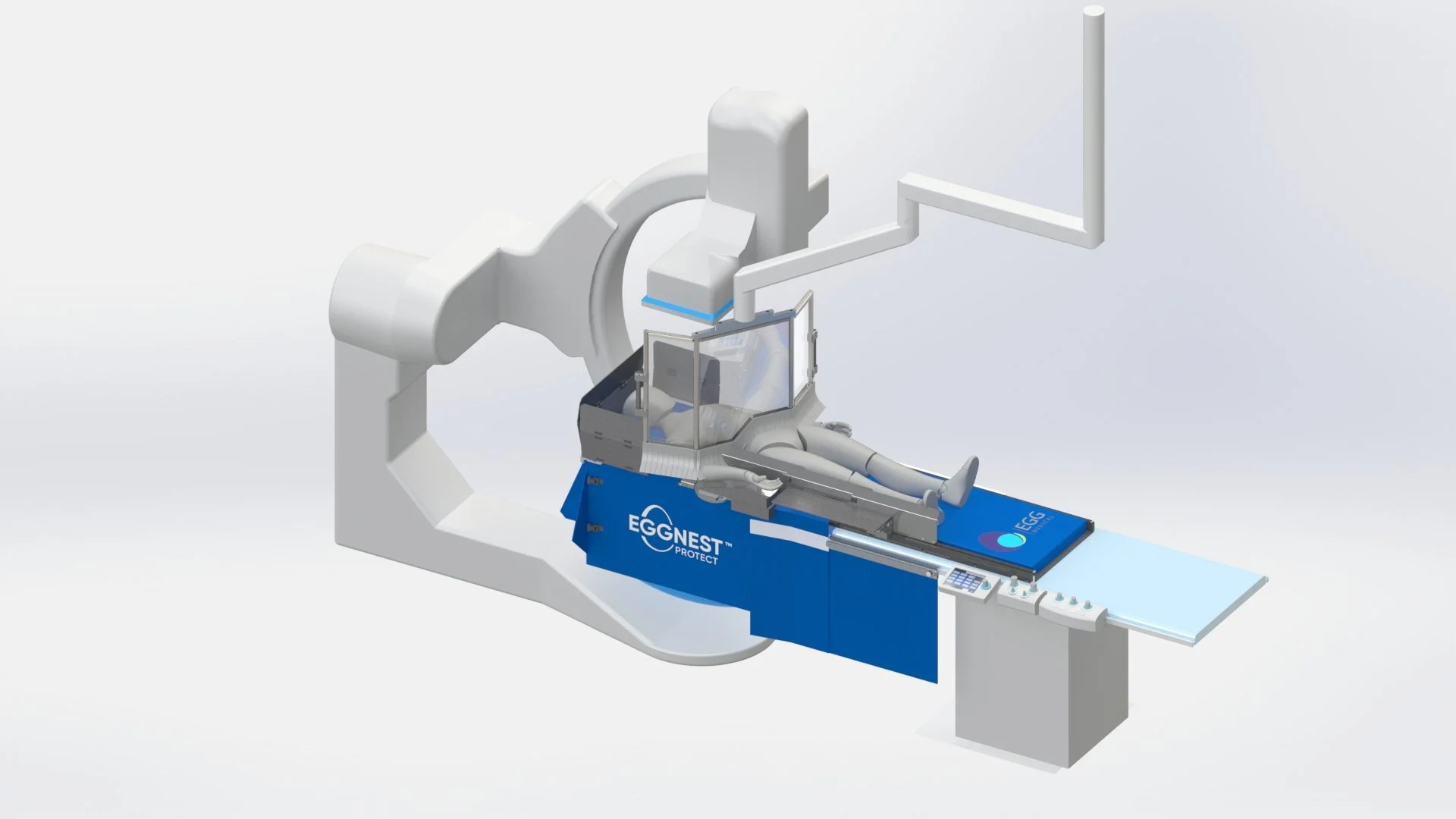
Designing a product that lives directly in the operating room—often positioned on or around the surgical table—introduces a unique set of constraints that go far beyond traditional product development. In this environment, every design decision must balance clinical effectiveness with strict requirements for ergonomics, safety, sterility, and ease of use under real procedural conditions.
For radiation protection systems, this challenge becomes even more nuanced. The product must provide meaningful attenuation of scatter radiation while remaining unobtrusive to the surgical workflow. It cannot interfere with clinician movement, limit access to the patient, or create additional cognitive or physical burden during procedures. At the same time, it must be robust enough to withstand repeated use, frequent repositioning, and the demanding pace of a clinical setting.
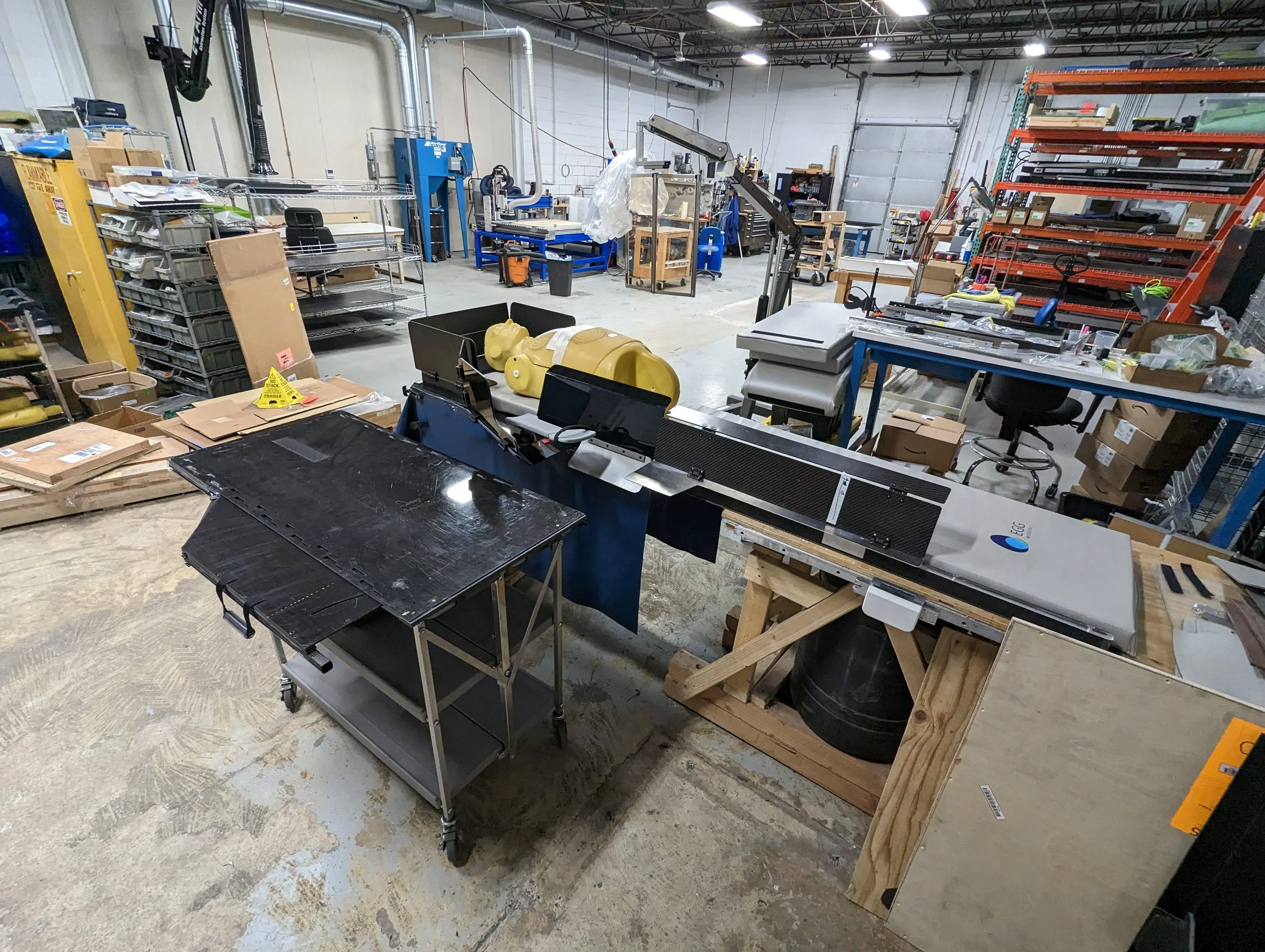
Achieving this balance required careful consideration of geometry, material selection, weight distribution, and mechanical interface design. Small changes in form factor could significantly impact both protective performance and usability. Iterative prototyping and real-world evaluation were essential in identifying configurations that delivered strong radiation shielding while maintaining intuitive handling and safe integration into the sterile field.
Ultimately, success in this space depends on designing for both physics and people—ensuring that high-performance protection does not come at the expense of clinical workflow, safety, or usability in critical care environments.
development and testing
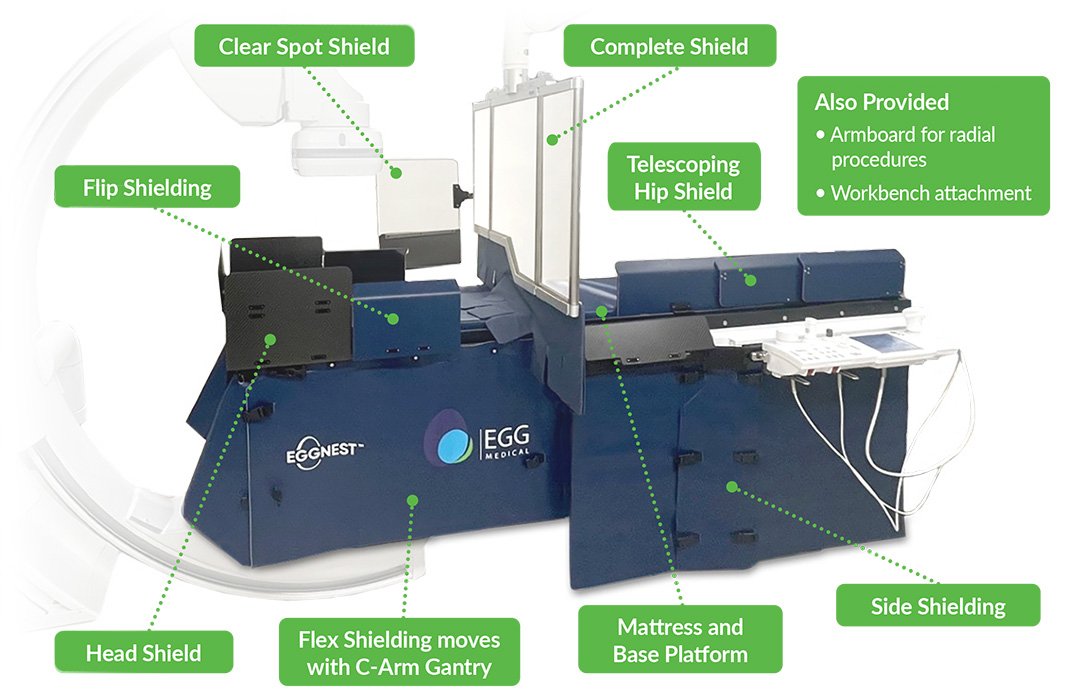
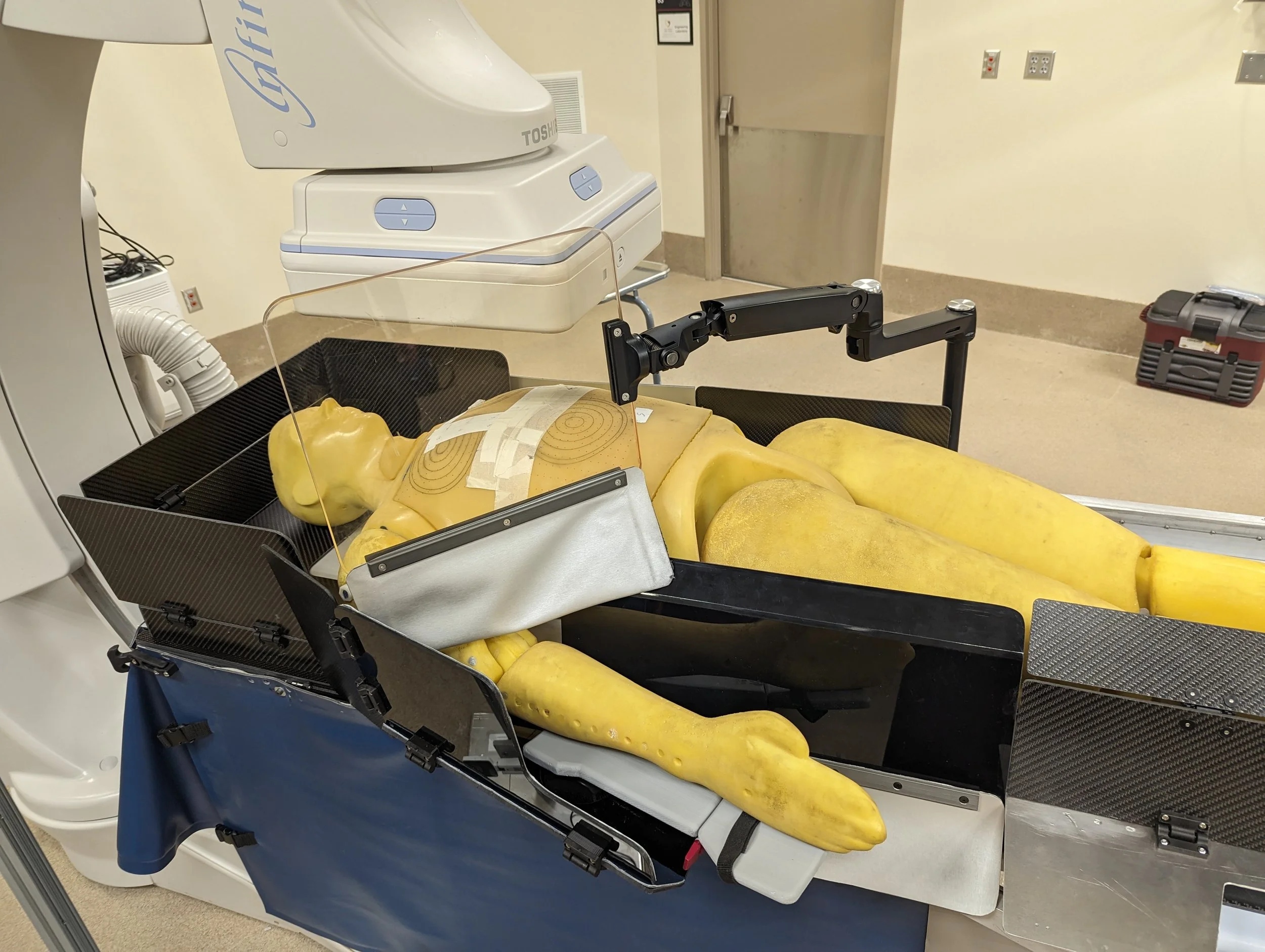
A key aspect of the product’s performance was the intentional use of advanced materials to balance radiation protection with clinical usability and workflow efficiency. Carbon fiber composites played a central role in the structural design, offering an exceptional combination of high strength, low weight, and radiolucency. This allowed the system to provide necessary structural integrity and positioning stability without introducing unnecessary mass or obstructing imaging pathways.
Below the surgical table, flexible shielding elements were incorporated to protect clinicians from scatter radiation while preserving freedom of movement for the imaging system. This flexibility was critical in reducing mechanical interference with the C-arm or imaging arm, allowing it to rotate and reposition with minimal obstruction. The result was improved procedural efficiency and reduced physical constraints during imaging workflows.
Above the table, leaded acrylic shielding was strategically integrated to provide effective radiation attenuation while maintaining clear visual access to the surgical field. This transparency was essential for surgeons and cardiologists, ensuring that protection did not come at the expense of situational awareness or precision during procedures.
Together, these material choices reflect a systems-level approach to design—leveraging the strengths of each material to optimize protection, ergonomics, and visibility within the demanding environment of interventional imaging and surgical care.
in market impact
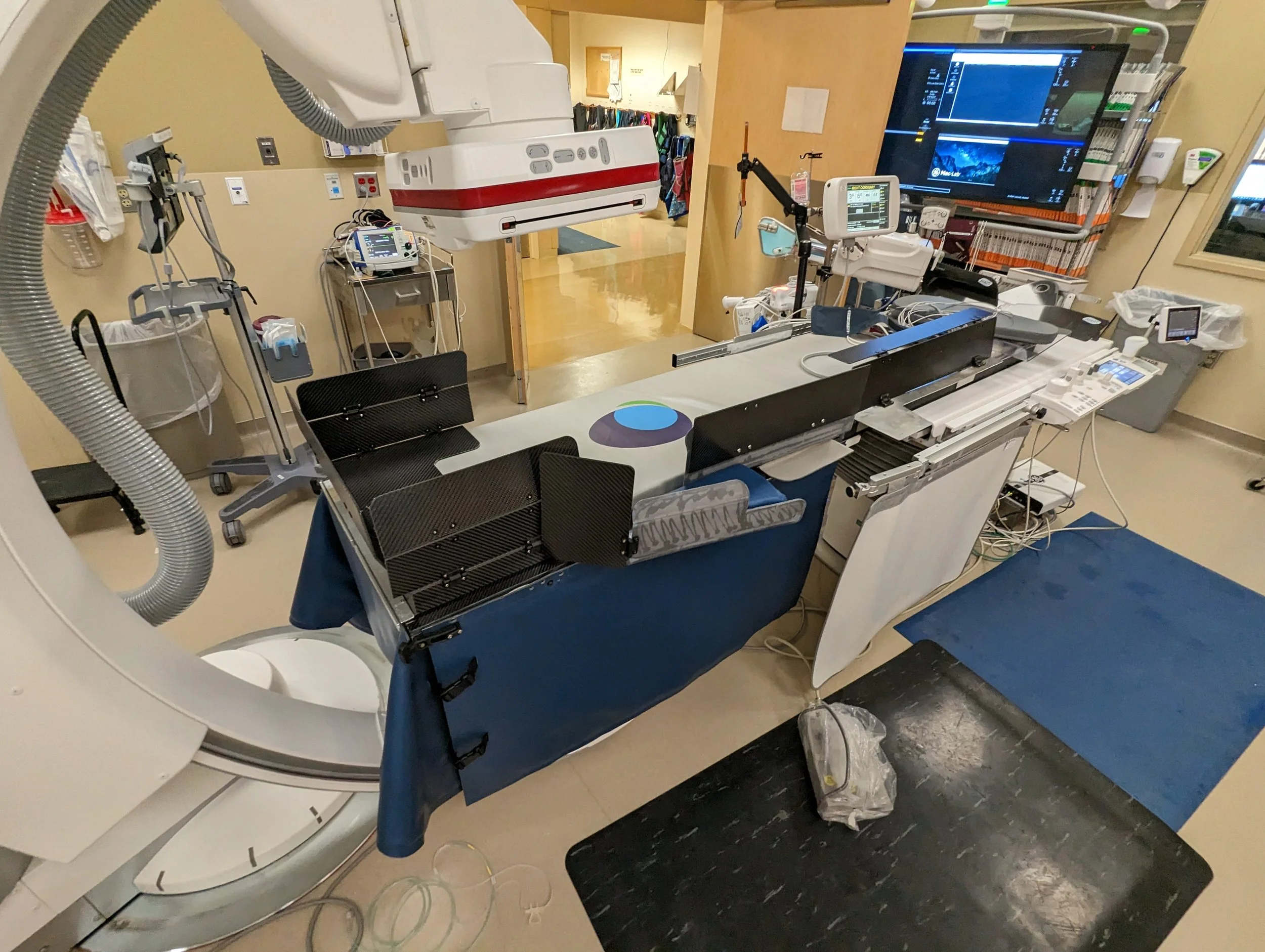
The product family developed during my time at Egg Medical has successfully transitioned from development into commercial production and is now deployed in clinical environments. These systems are actively used in medical imaging settings, providing radiation protection for clinicians while supporting efficient procedural workflows.
Seeing the technology move beyond the development phase and into real-world use represents a meaningful validation of the engineering, testing, and design efforts invested throughout the program. The solutions continue to demonstrate reliable performance in demanding clinical conditions, contributing to safer operating environments and improved procedural ergonomics for healthcare professionals.